

shape
shape

PRE-CLINICAL AND SKILL LAB

PRE-CLINICAL AND SKILL LAB

PRE-CLINICAL AND SKILL LAB

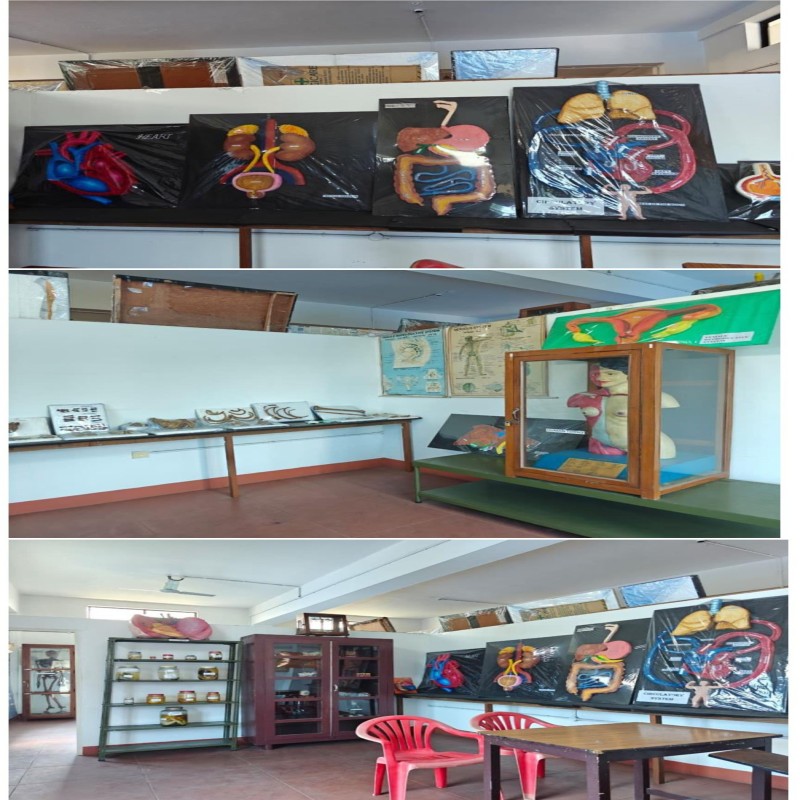
The Pre-Clinical & Skill Lab is a foundational practical training area in a nursing college designed to help students bridge the gap between theoretical knowledge and clinical practice. It provides a highly specialized, controlled environment where students can master human anatomy, physiology, and pathology. Equipped with precise anatomical models, real specimens, and detailed charts, the lab serves as an essential stepping stone before students transition into real hospital postings and patient care settings.

Objectives of the Pre-Clinical Science Lab

  1. To develop a deep, structural understanding of human anatomy and physiological systems.
  2. To train students in identifying macroscopic pathologies through authentic medical specimens.
  3. To improve clinical visualization skills using detailed 3D anatomical models.
  4. To promote evidence-based learning by integrating theoretical concepts with hands-on observation.
  5. To enhance foundational assessment skills necessary for general nursing and advanced specialties.

Facilities and Equipment

The lab is fully equipped with an extensive inventory of skeletal structures, biological specimens, anatomical models, and instructional charts:

1. Skeletal Structures

  1. Adult human articulated skeleton (housed in a protective glass cupboard with a dedicated hanging facility)
  2. Standalone adult human articulated skeleton

2. Biological Specimens

  1. Organ & Structural Tissue: Head of the femur, heart, lungs and heart combined, lunate bone.
  2. Pathological Specimens: Gallbladder stone, fibroid uterus.
  3. Developmental Anatomy: Multi-stage fetal specimens (12 weeks, 18 weeks, 33 weeks, and full-term fetus).

3. Anatomical Models

  1. Bony & Skeletal Structures: Skull, mandible, maxilla, scapula, clavicle-sternum, ribs, vertebrae, sternum, hyoid bone, sacrum, pelvic bone, femur, patella, tibia-fibula, tarsals-metatarsals-phalanges, carpal-metacarpal, phalanges, ulna, radius, and humerus.
  2. Organ Systems & Internal Anatomy: Human female torso, pelvic cavity, brain, sagittal section of the brain, circle of Willis, skin, structure and function of the eye, human ear, lymphatic system, circulatory system, and cross-section of the adrenal gland.
  3. Visceral & Reproductive Systems: Gastrointestinal system, liver, renal system, lungs (demonstrating normal respiration), heart, testes, male reproductive system, and female reproductive system.

4. Instructional Charts

  1. Cardiovascular System: Base of the heart, cardiac cycle, atrium, ventricle, atrioventricular septum, and heart in diastole.
  2. Reproductive & Endocrine Systems: Reproductive systems, genitourinary organs (male and female reproductive systems), and steroids (harmful events).
  3. Sensory & Nervous Systems: Nervous system, binaural hearing, and ear (organ of hearing & balance).
  4. General Systems & Equipment: Ribs, vertebrae, sternum, hyoid bone, stomach, and microscope function.

Skills Practiced in the Lab

Students are trained in:

  1. Anatomical Mapping: Identifying complex bony landmarks, joint configurations, and structural relationships.
  2. Systemic Assessment: Tracing nerve pathways, the circulatory system, and the circle of Willis.
  3. Embryonic & Fetal Tracking: Understanding gestational development and structural changes from 12 weeks to full term.
  4. Pathology Recognition: Distinguishing between normal structures and abnormal tissue variations (e.g., fibroid uteri, gallstones).
  5. Microscopic Correlation: Utilizing foundational equipment like the microscope to bridge macroscopic anatomy with cellular structures.

Importance of the Lab

The Pre-Clinical Science lab:

  1. Builds Confidence: Gives students a clear spatial and visual understanding of the human body before they perform assessments on living patients.
  2. Improves Critical Thinking: Enhances diagnostic reasoning by allowing students to examine real specimens and pathological variations firsthand.
  3. Provides Risk-Free Exploration: Allows for the detailed, repeated study of fragile or complex structures (like the inner ear, brain sections, or reproductive organs) that are difficult to visualize in clinical settings.
  4. Ensures Patient Safety: Proper foundational training ensures students understand internal anatomy thoroughly, minimizing errors during invasive clinical procedures later on.

Conclusion

The Pre-Clinical & Skill Lab plays an essential role in nursing education by preparing students to provide competent, scientifically grounded care. By offering immersive, tactile access to the building blocks of human life, it bridges the gap between classroom textbooks and actual clinical rotations, helping students evolve into highly skilled, knowledgeable healthcare professionals.